Product Structure and Technology Trends
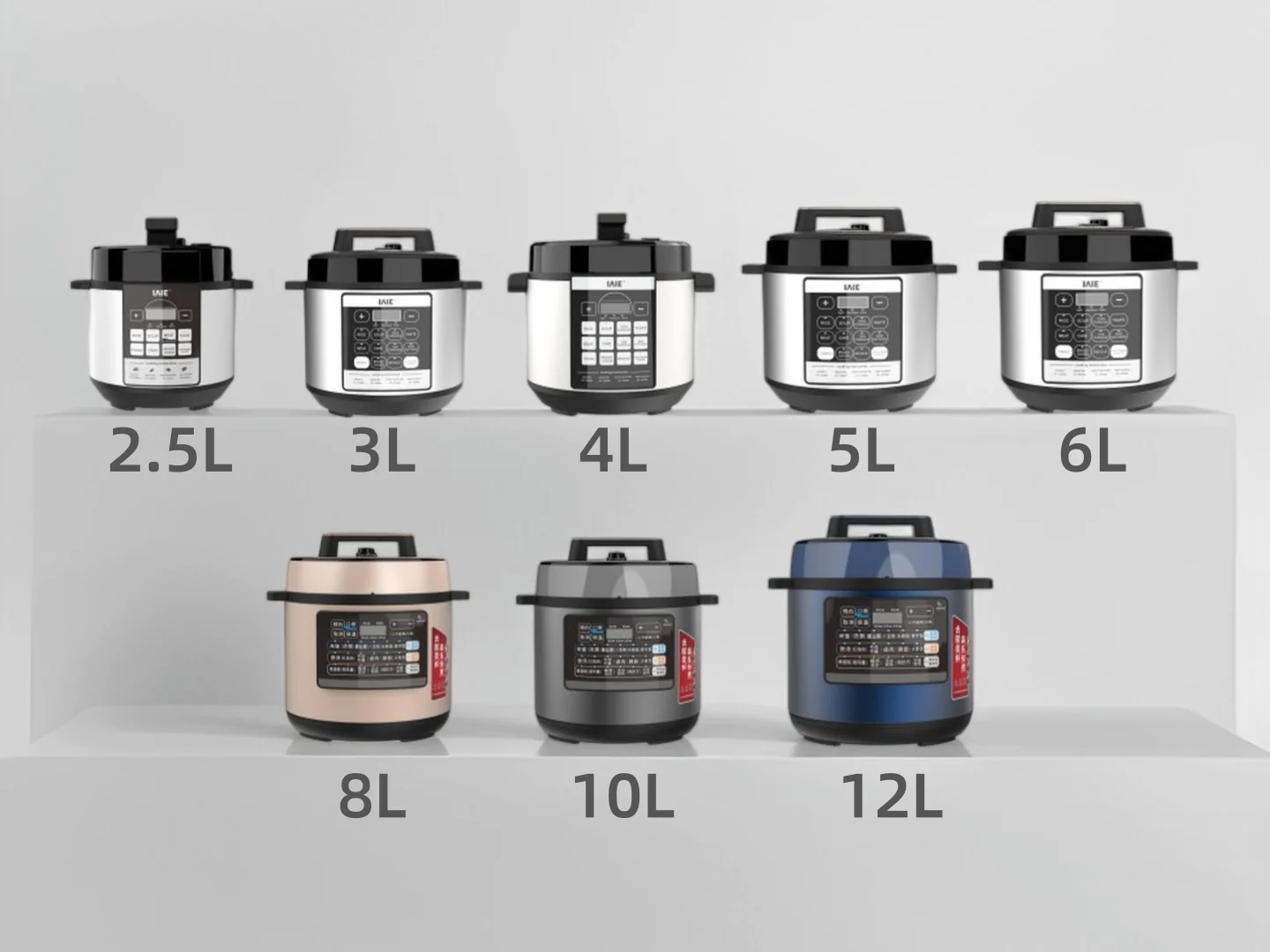
Capacity Distribution Analysis
Global demand structure typically follows this ratio:
- 2L–3L: ~20% (single users / compact living)
- 4L–6L: ~60% (mainstream household demand)
- 8L–12L: ~20% (commercial / large family / catering use)
5L and 6L remain the most competitive and fastest-moving SKUs in most export markets.
Feature Penetration Trends
Market penetration of advanced features continues to increase:
- Digital control panels now account for over 65% of new models.
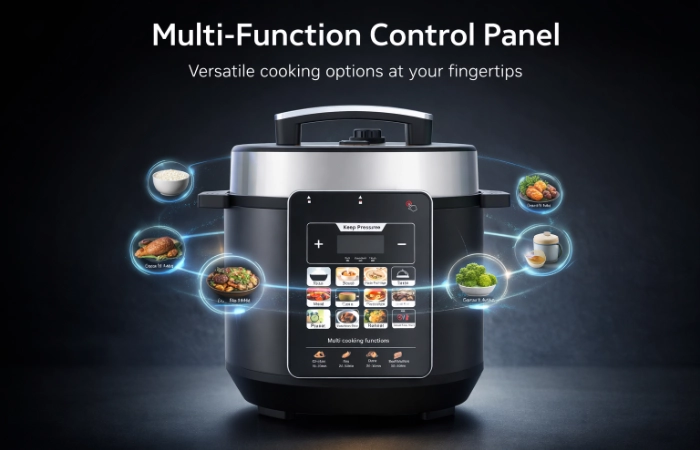
- Multi-menu presets (8–12 functions) have become standard configuration.
- Automatic pressure release systems are increasingly expected in mid-to-high-end models.
Basic mechanical models still maintain strong demand in price-sensitive regions, particularly in emerging markets.
Technology Evolution
1.Heating Technology
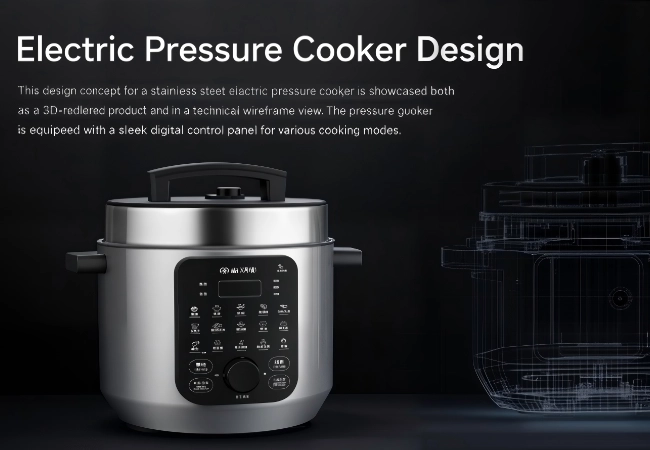
3D heating systems are gradually replacing single bottom-heating structures.
Higher wattage (900W–1200W for household models) improves cooking speed and efficiency.
Thermal distribution uniformity has become a key R&D focus.
2.Safety System Standardization
Premium electric pressure cookers integrate 8–12 safety mechanisms, including:
●Lid lock protection
●Pressure limiting valve
●Anti-block shield
●Overheat protection
●Automatic pressure release
International safety compliance continues to strengthen industry entry barriers.
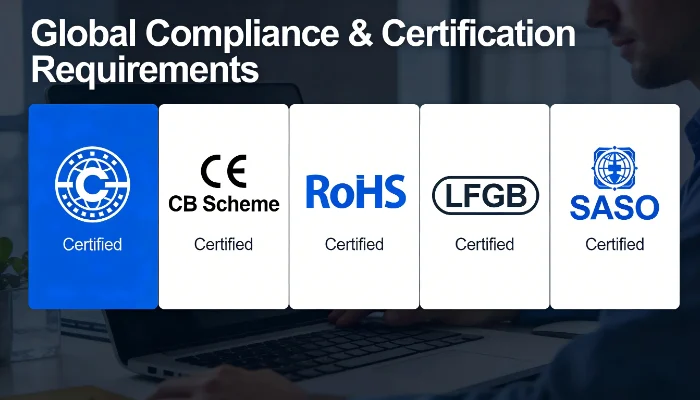
Global Compliance & Certification Requirements
Export markets require strict regulatory approvals. Major certifications include:
- CE – Mandatory for European Union markets
- CB Scheme – International testing recognition
- RoHS – Environmental compliance
- LFGB – Food-grade material regulation
- SASO – Saudi Arabia compliance requirement
Certification readiness significantly reduces export lead time and improves distributor confidence.